
Featured Articles
Start with the right pond care guide
Find practical guides that help simplify pond care by problem type, season, and treatment goal.

The "Jar Test": Determining What's Up with Your Water Column
The jar test method is a simple yet effective technique employed by pond owners to gain insights into the composition of their water column. This method invo...
Read articleNeed help choosing the right pond care solution?
Use articles, videos, and product guides to better understand what is happening in your pond before you treat.
-

The "Jar Test": Determining What's Up with Your...
The jar test method is a simple yet effective technique employed by pond owners to gain insights into the composition of their water column. This method involves collecting a water...
Read More -

The "Hand Test": Floating Growth ID
The hand test is a simple yet effective way to discern floating plants like Duckweed and Watermeal from algae. It involves collecting and examining what you find on your lake or...
Read More -

What Does Poor Water Quality Impact?
Deteriorating water quality in freshwater environments can have multifaceted adverse effects on both the environment and human well-being: Habitat Disruption: Polluted water disrupts aquatic ecosystems, leading to the potential decline or...
Read More -

Not All Pond Dyes are Equal
Not all pond dyes are created equal. Some brands are highly diluted, making the value much less than a high-quality, highly concentrated. Another differentiator is EPA registration. EPA Registered dyes have been tested in...
Read More -

Phosphorus Pollution: Consequences for Ponds an...
Phosphorus is an essential nutrient for plant growth in freshwater ecosystems, but its presence can also cause significant challenges. While it naturally occurs in healthy aquatic environments, high levels of...
Read More -

Which Pond Dye Color is Better: Blue or Black?
There are three common dye colors available for use: blue, black and a mix of the two that imparts a deeper color on the water surface. The black dye is...
Read More -

Are Cattails Beneficial?
Cattails (Typha spp.) can have both positive and negative impacts on a lake shore, and whether they are beneficial or not for a lake shore owner depends on various factors...
Read More -

Erosion Control 101
Erosion control is crucial for lake shore owners to protect the health of the lake and maintain the stability of their property. Here's a basic guide to erosion control for...
Read More -

How Did I Get Watermeal?
Watermeal can be spread from one pond to another by animals including birds like geese and ducks. Humans can inadvertently carry watermeal from waterbody to waterbody in bait buckets, on...
Read More -

Watermeal: Why does it grow so fast?
Watermeal (Wolffia spp.) is a type of tiny aquatic plant commonly known as the world's smallest flowering plant. It is known for its incredibly rapid growth, and several factors contribute...
Read More -

Watermeal 101
Watermeal (Wolfia spp.) is a very small shinny, light green free-floating, rootless plant. Watermeal is the smallest seed-bearing plants in the world. The individual plants are slightly larger than a grain of sand and often...
Read More -

3 Major Problems with Duckweed
Duckweed often outcompetes algae, blocking the sunlight that algae need to grow and reducing dissolved oxygen (DO) levels. This leads to dead native plants and a management nightmare if left unchecked....
Read More -

Why Does My Pond Have Duckweed?
Duckweed is a common aquatic plant that can easily find its way into ponds and other bodies of water. There are several ways duckweed can enter your pond, including: Natural...
Read More -

HABs: Harmful Algae Blooms
Toxic algae, also known as harmful algal blooms (HABs), are a natural occurrence in aquatic ecosystems where certain species of algae grow and reproduce rapidly, leading to an overabundance of...
Read More -

How Do I Control Algae?
Controlling algae in ponds or other aquatic environments is essential to maintain water quality and prevent issues such as overgrowth, unsightly appearance, and potential harm to aquatic life. It's important...
Read More -

What Does Poor Water Quality Impact?
Deteriorating water quality in freshwater environments can have multifaceted adverse effects on both the environment and human well-being:
Read More -

Duckweed 101
Duckweed, a diminutive free-floating aquatic plant, is a member of the Lemnaceae family. Among the tiniest and most uncomplicated flowering plants on our planet, various species of duckweed thrive in...
Read More -

Why Does My Algae Keep Coming Back?
To prevent algae from continuously coming back, it's important to address the underlying causes and conditions that promote their growth. This may involve reducing nutrient inputs, improving water circulation, using...
Read More -

What is Algae Really?
While some algae are beneficial and contribute positively to the ecosystem, excessive algae growth, often referred to as an "algae bloom," can lead to water quality issues.
Read More


Helpful starting points
Common pond care questions
Not sure where to start?
Start by identifying whether the issue is algae, aquatic weeds, or water quality. From there, you can choose a guide that matches what you are seeing in your pond.
Can I use these articles to choose a product?
Yes. Our guides are designed to help you understand the problem first, then point you toward the right treatment category.
Should I test my water?
Water testing is a smart step when algae or poor clarity keeps returning. It can help identify nutrient problems and guide a longer-term pond care plan.
Popular Pond Care Products Shop all
-
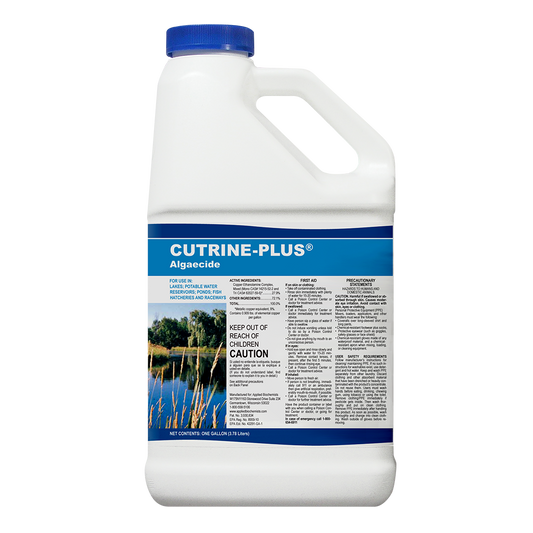
Cutrine® Plus Algaecide and Herbicide
Liquid copper algaecide for fast control of planktonic, filamentous, and Chara algae. Safe for irrigation, livestock, and...Regular price From $78.22Sale price $78.22 Regular priceUnit price per$0.00 -
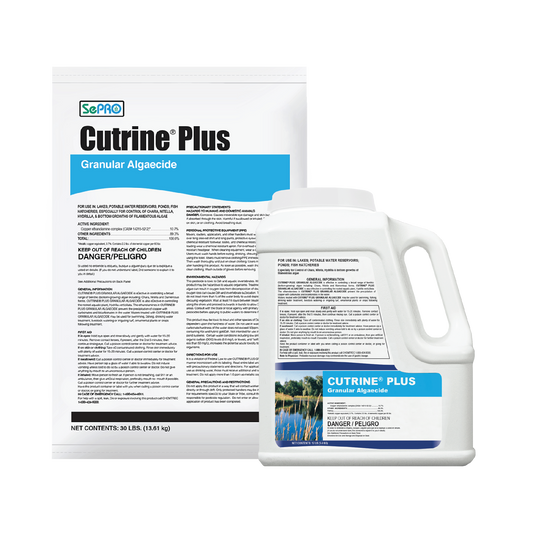
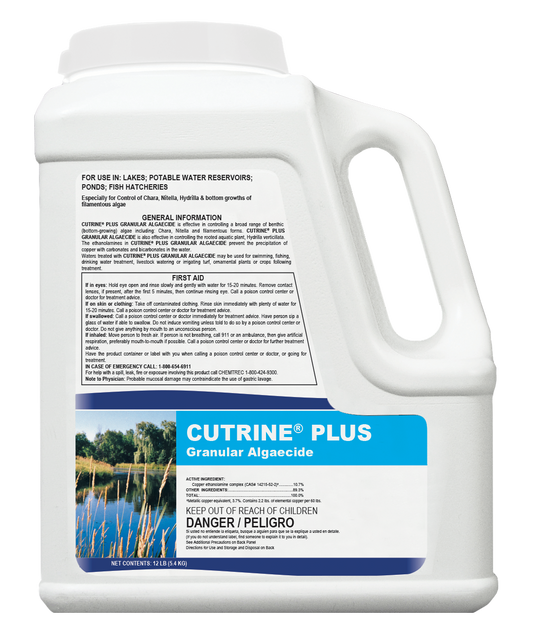
Cutrine® Plus Granular Algaecide
Granular copper algaecide for fast control of Chara, filamentous algae, and cyanobacteria. No water use restrictions. Safe...Regular price From $86.00Sale price $86.00 Regular priceUnit price per$0.00 -
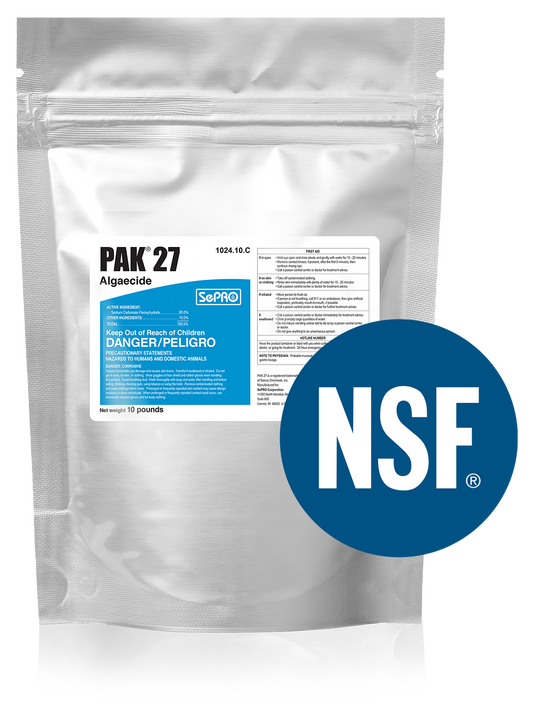
PAK® 27 10 Pound Bag
Peroxide-based granular algaecide for planktonic algae. Copper-free, koi-safe, and NSF-certified for use in drinking water and sensitive...Regular price $72.48Sale price $72.48 Regular priceUnit price per$0.00 -
Captain 1 Gallon Bottle
Fast-acting liquid copper algaecide for planktonic, filamentous & chara. Safe for irrigation, livestock & wildlife. No water...Regular price $71.96Sale price $71.96 Regular priceUnit price per$0.00 -
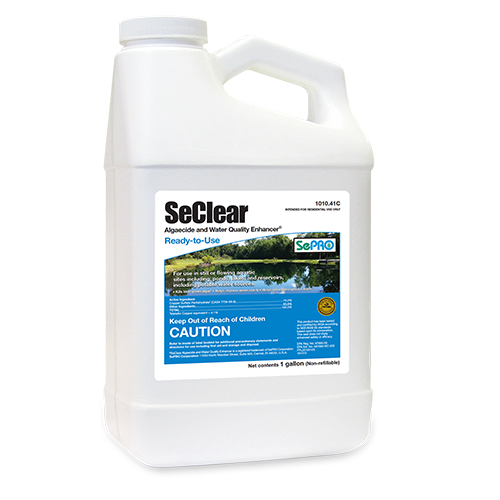
SeClear Algaecide & Water Quality Enhancer
Liquid algaecide and water enhancer that kills algae and binds phosphorus. Fast, safe, and effective—ideal for ponds,...Regular price $70.07Sale price $70.07 Regular priceUnit price per -
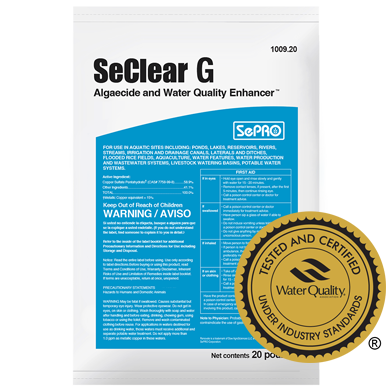
SeClear G 20 Pound Bag
Granular algaecide for Chara, Nitella, and more. Controls algae and binds phosphorus for clearer water and longer-lasting...Regular price $271.61Sale price $271.61 Regular priceUnit price per$0.00 -
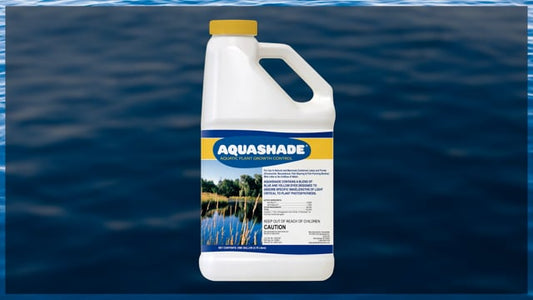
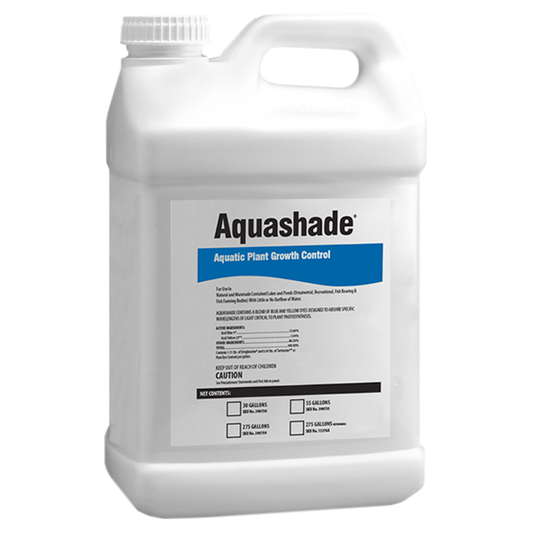
Aquashade® Aquatic Plant Growth Control
Three-in-one colorant that also serves as an algaecide and herbicide. EPA-approved blue pond dye that blocks sunlight...Regular price $66.50Sale price $66.50 Regular priceUnit price per$0.00 -
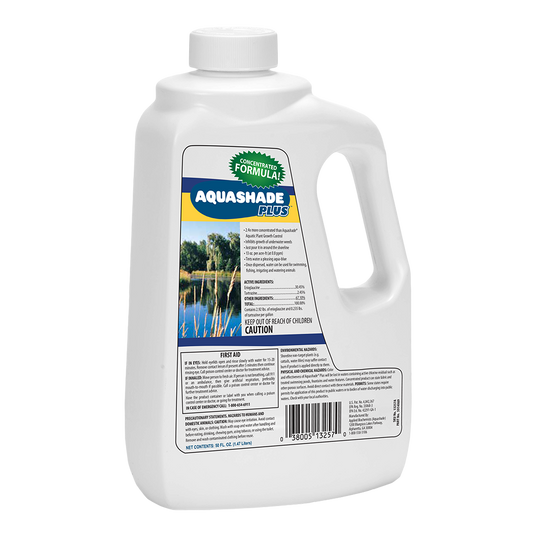
Aquashade® Plus Aquatic Plant Growth Control
Three-in-one colorant that serves as an algaecide and herbicide and is 2.4 times more concentrated than the...Regular price From $66.18Sale price $66.18 Regular priceUnit price per$0.00



1 /5 /6 /7